
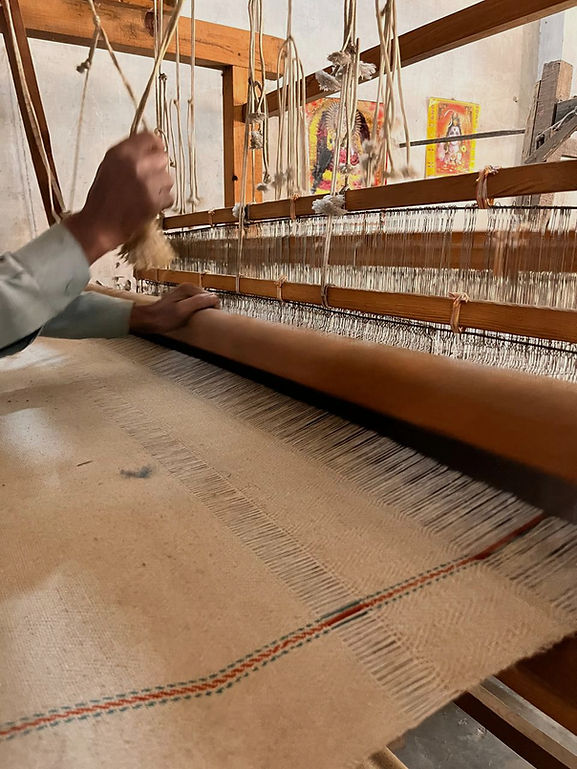
2 Shaft Weaving
The 2-shaft loom is the foundation of all weaving techniques. Despite its simplicity, it offers incredible versatility in creating beautiful, functional fabrics. This section covers essential patterns and techniques that form the backbone of khadi textile production.
Two-shaft weaving allows for plain weave and its variations, which are among the most durable and widely used fabric structures. These techniques are ideal for producing everyday wear, home textiles, and functional fabrics.
Key Advantage: 2-shaft looms are easier to operate and maintain, making them ideal for training new weavers and producing consistent, high-quality fabrics efficiently.
Common 2 Shaft Patterns


Designs
Doab 2SD1
Doab

Design 4
This is placeholder text. To change this content, double-click on the element and click Change Content.

Design 7
This is placeholder text. To change this content, double-click on the element and click Change Content.

Design 2
d2a

Design 5
This is placeholder text. To change this content, double-click on the element and click Change Content.

Design 8
This is placeholder text. To change this content, double-click on the element and click Change Content.

Design3
This is placeholder text. To change this content, double-click on the element and click Change Content.

Design 6
This is placeholder text. To change this content, double-click on the element and click Change Content.

Design 9
This is placeholder text. To change this content, double-click on the element and click Change Content.

Empowering khadi institutions across India with accessible design knowledge
Essential Techniques
Warp Preparation
-
Calculate warp length based on desired fabric length
-
Select appropriate yarn count and color
-
Wind warp threads on the warping board
-
Transfer to loom maintaining tension
Threading
Thread heddles in correct sequence
Ensure even distribution across width
Check for skipped or doubled threads
Secure ends properly
Weaving Process
Maintain consistent beat and tension
Monitor selvedge formation
Check pattern repeat regularly
Adjust as needed for even fabric
GET IN TOUCH
Head Office
4th Floor, National Institute of Fashion Technology,
Hauz Khas, New Delhi -110016


